McCaul Underscores Importance of Information-Sharing Ahead of FIFA World Cup, America 250
WASHINGTON – Congressman Michael McCaul (R-Texas) — chairman emeritus and current vice chair of the House Committee on Homeland Security — questioned National Fusion Center Association President Mike Sena at a committee hearing about security coordination ahead of the FIFA World Cup and America 250. McCaul is also chairman of the committee's Task Force on Enhancing Security for Special Events in the United States.
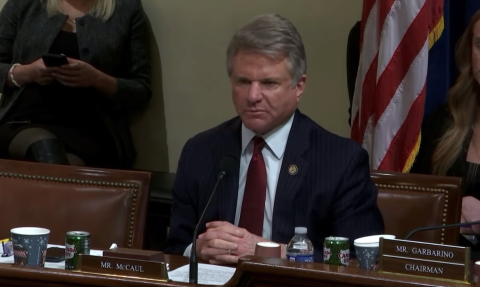
Full Exchange:
McCaul: Thank you, Mr. chairman. Let me start out by saying I remember back when I chaired this committee, [we witnessed] the Boston Marathon bombing ... And it was avoidable. It was preventable, had federal, state, and local [authorities] been sharing information. The FBI had information about Mr. Tamerlan’s trip to Dagestan where he radicalized and came back. They did not share that adequately with the joint terrorism task force. Specifically, the commissioner of Boston did not have any of that information even though he had two agents or two officers on the task force. We changed that by law, but it’s all about connecting the dots. Mr. Sena, you’re in charge of the fusion center, which sometimes comes under criticism. We formed the fusion centers… You know everybody talks about connecting the dots after 9/11, and that’s exactly what you are doing. What do you see as one of the biggest threats as you look at the environment out there and threat matrix, what keeps you up at night the most?
Sena: It’s a combination of things. The first thing in the back of my head right now is the financial piece because we do need the resources to get things going ... It’s a threat because if we don’t have the right people in place to do the job, it won’t get done. The other thing is the multimodal communication systems that we’ve got right now. The lack of getting that tip and lead — that piece of information. We do a lot of work educating our law-enforcement, public safety, private sector partners on what we need as far as tips and leads — those suspicious activity reports. But we have a lot of different places those go right now — multiple federal systems, multiple private sector parties that take tips and leads. The problem is when you have so many silos, how do you connect them all? And then it comes to game day, and those operations ahead of time. How do you bring people together? For example, during the Super Bowl, we had seven different systems up, and so that worries me tremendously merging those technologies.
McCaul: Well the Super Bowl is a test, right?
Sena: It’s a test for us because FIFA is coming to town, so that was a test. And I can tell you that came up in the after action when people were talking: How do I watch seven systems that I’m having to put data into seven different platforms? My own people especially. But how do we merge those? And the technology is there. It’s policy and practice and training.
McCaul: Well, if the technology is there, is it policy and practice prohibiting that?
Sena: It is; everyone has their own silo.
McCaul: Okay, that’s a real problem because it’s going to be March, and they start in June, and you’ve got over 100 games in three countries. You know Mexico, Canada, and the United States. Let me ask you quickly. We were down in Mexico and got a joint training program with our military, both the United States and Mexico, passed by their parliament. We saw the recent events in Mexico. They have drones. The violent uptick after the Jalisco cartel member was taken out. I know this is not in your purview, but you have to learn from those mistakes. How concerned are you about the games in Mexico?
Sena: The big concern I’ve got, especially with drone activity, is that for example I had a person that was planning on flying a drone right into the Super Bowl. And so part of that is that we can have counter measures there, but there are so many other locations that we don’t have people trained in the equipment in place for counter measures that they can go anywhere a crowd is at and immediately hit those targets and cause mass destruction, and we don’t have the capability across-the-board to fight every drone threat.
McCaul: That’s a great segue to my next point and that is under the Safer Skies Act the chairman introduced and my task force recommended, we got that passed in the National Defense Authorization [Act] that gives the ability to share with state and locals the counter drone authorities, which is critically important. I’m surprised we had any opposition to that.
###