McCaul Discusses Concerns About the Future of Syria at Foreign Affairs Committee Hearing
WASHINGTON – Congressman Michael McCaul (R-Texas) — chairman emeritus of the House Committee on Foreign Affairs — discussed his concerns about the future of Syria at a full committee hearing, titled "Syria at a CrossRoads: U.S. Policy Challenges Post-Assad." McCaul directed his questions to Nadine Maenza, the former chair of the U.S. Commission on International Religious Freedom.
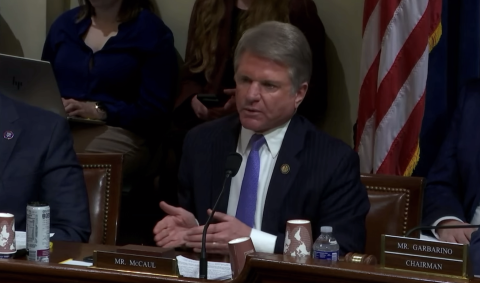
Remarks as delivered:
McCaul: Thank you, Mr. Chairman; thanks for holding this important hearing. We're focused on a lot of other areas of the world right now, but we can't let our eyes off the ball on Syria.
I remember when I chaired the Homeland Security Committee, watching the rise of ISIS and the caliphate was one of the most terrifying things I've seen in my career and my lifetime, and the threat it posed to the United States and our national security interests was real, as we saw foreign fighters entering Europe and the United States.
So here we are back in Syria again. All roads lead to Damascus. ...
[The] March 10th agreement was done in part to satisfy conditions made by the Congress to lift the Caesar Act sanctions. Unfortunately, that document was not fully enforced. We saw an upscale in violence.
I was in Israel and I talked to the Druze Sheikhs there. They showed me videos of decapitations similar to what I saw when I chaired Homeland a decade ago when ISIS controlled Syria.
The SDF who was an ally of ours — we worked with the SDF to defeat ISIS — has been under advancement and attack by Syrian forces as well.
Most disturbingly, we saw prisoners from the prison in Eastern Syria being released to go God knows where. Thank God CENTCOM stepped in and removed 7,000 remaining ISIS detainees to Iraq, but we do not have a full accounting of what happened to those who actually got out. That is a nightmare scenario from a national security perspective.
I am pleased that there is a new agreement [signed on] January 30th in response to this uptick in violence against ethnic minorities, including Christians, in response to the attacks on the Kurds and SDF.
When the March 10th [agreement] called for integration and normalization, that was not happening. So now we have this new agreement, January 30th, an attempt to get back to normalization and integration between the ethnic minorities, SDF forces, and the new Syrian government.
Ms. Nadine Maenza, can I ask you: What is the status now of the implementation of the January 30th agreement?
Maenza: Thanks so much, congressman. I did get an update this morning from northeast Syria, and of course there's great hope that this agreement will be successful. But currently, the Syrian government has not withdrawn troops, and they need to by the end of the day. While the governor of Hasakah was appointed and chosen, he's assumed his responsibility, but the government hasn't officially appointed him yet. You know, they also apparently are appointing people to different positions without consultation from the SDF. We also, of course, continue to see the siege of Kobani, which is dangerous at this point. And there's supposed to be an exchange of detainees, and that isn't also being facilitated, and there continues to be hate speech and rumors that are just adding a lot of tension to it.
... I think that we have not seen the Syrian government keep any of their deals with the SDF so far. But there is hope. I tell you what: they want this to work in the northeast. But ... I fear that unless the international community and the U.S. in particular, is really strong on it, that might not happen.
McCaul. Well, my biggest concern is a return to the Islamic State. I am supportive of this new president. I want him to succeed. But I do not want a return to an Islamic State again in Syria.
###